Trauma and Recovery
The Aftermath of Violence—From Domestic Abuse to Political Terror
by Judith Lewis Herman
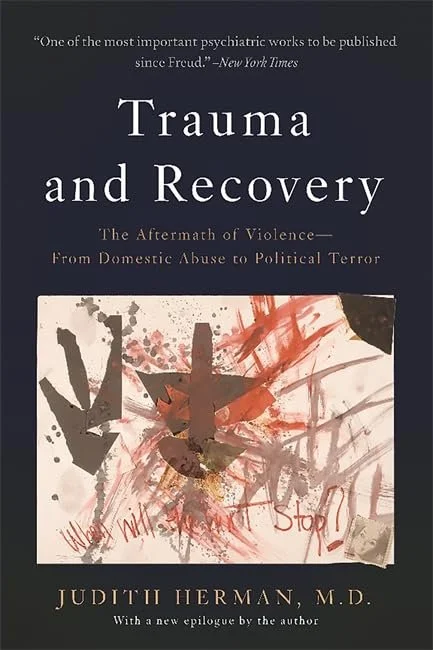
This book was groundbreaking when it was originally published in 1992, because it uses a feminist lens for trauma studies—I love it for that. Herman brings domestic abuse and sexual assault into a conversation that was dominated by war and political violence. It also introduces the concept of Complex PTSD in survivors of prolonged interpersonal trauma.
Trauma and Recovery is written for researchers and clinicians, not as a self-help book, but I think anyone working in trauma-informed contexts will find it helpful. Especially important is its outline of the three phases of trauma recovery:
Establishing safety (physical and psychological)
Remembrance and mourning (telling the story, grieving losses)
Reconnection with ordinary life (restoring agency and relationships).
Familiarity with these three phases is important for trauma-informed practice in any field. If a patient, client, interviewee, child, etc. is in the first phase—if they are not physically safe—they need different support than if they were in the second or third phase, and so on.
The author is careful in how she relays traumatic material. In contrast to van der Kolk in The Body Keeps the Score, Herman does not go into graphic or explicit detail and models restraint and care in how trauma is represented, including care for the reader.
In an informative and lovely epilogue, Herman reflects on changes in the field since Trauma and Recovery was first published thirty years earlier and gives her opinion on current advances. It’s my favourite part of the book.
Note: In case you don’t have time to read the book, there are many online resources that describe the three phases of recovery, such as Phases of Trauma Recovery (Manitoba Trauma Information and Education Centre).
(Format: In the audiobook narrated by Alison Mathews and Xe Sands, the narration is clear and easy to follow.)