Healing the Fragmented Selves of Trauma Survivors
Overcoming Internal Self-Alienation
by Janina Fisher
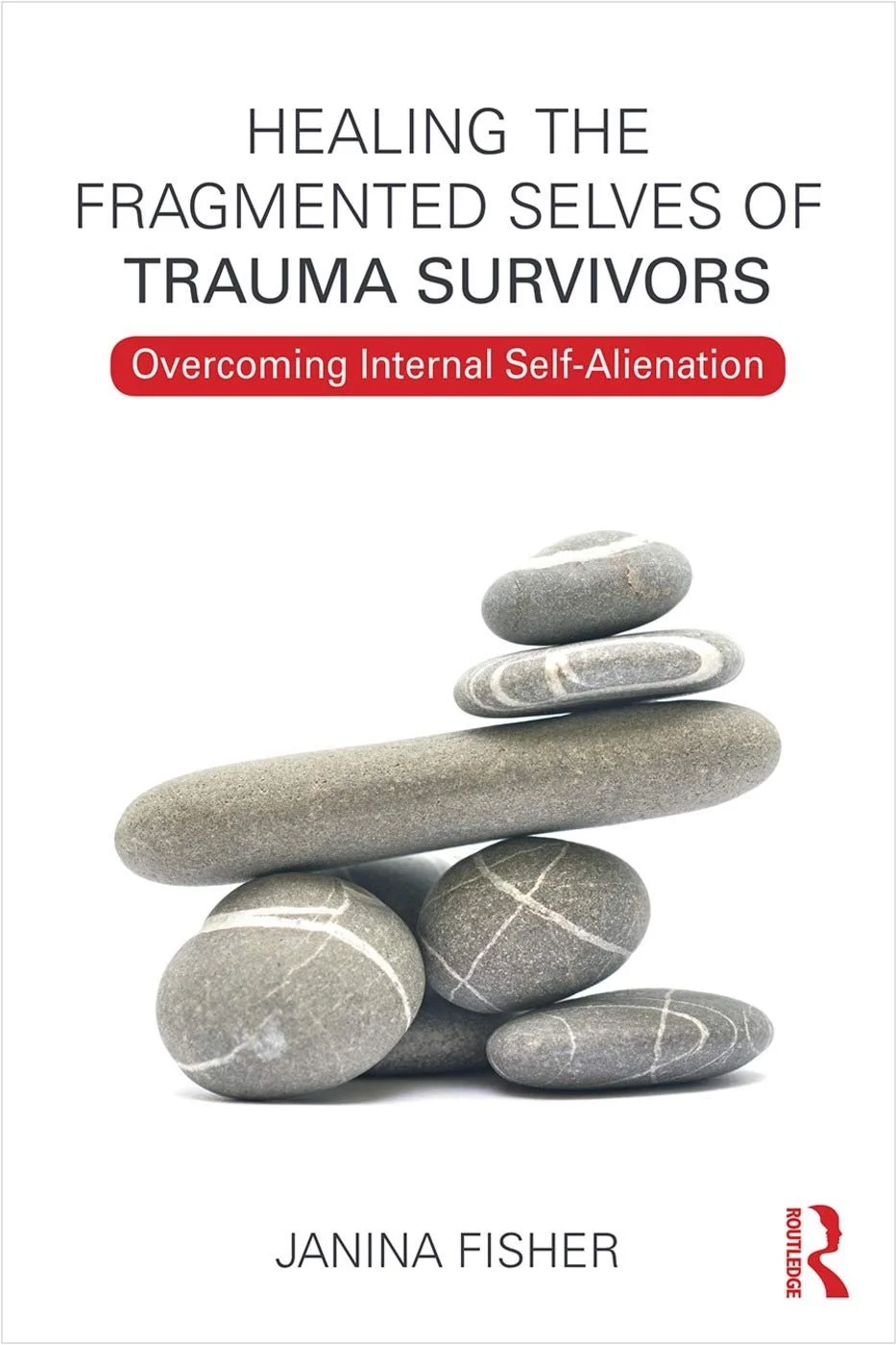
I’m so glad to have found this book.
After reading extensively on Internal Family Systems therapy, ¹ I still felt like something was missing: a clear explanation of how inner parts (or “selves”) form in complex trauma, and how they can be integrated through the therapeutic process. And that’s where this book comes in.
Fisher draws on neuroscience, attachment theory, and clinical experience to show that our brains develop distinct parts, each representing an adaptive survival response to overwhelming experience. There might be a hypervigilant part, say, who learns to read the smallest changes in someone’s mood. Or a dissociative part that zones out in order to escape stressful memories. Each part develops its own survival strategy, even if those strategies later conflict with one another.
As a trauma-informed editor, I frequently work with poetry, memoir, and other creative nonfiction written by survivors of complex trauma. I’m currently editing two books whose authors describe the process of understanding and then integrating the parts of themselves that formed during profoundly traumatic childhoods. Their work on the page, as well as my personal experience with complex trauma, are illuminated in Healing the Fragmented Selves of Trauma Survivors. Fisher gives the scientific and clinical framework that explain our lived experience.
Compared with some popular trauma books (The Body Keeps the Score springs to mind), Fisher writes in a trauma-informed way. She doesn’t go into details about traumatic events and, even in her clinical examples, the reader often doesn’t even find out what caused the trauma; what we see is how the person is affected now, as an adult.
The book is written for therapists, but the theories and techniques are approachable for anyone learning about trauma, including survivors.
(Format: In the print copy, there are some very long paragraphs that can make it harder to absorb the material. The audiobook, narrated by Emily Durante, does a good job of pausing in those paragraphs so you’re not faced with an audible wall of text.)
1. See Introduction to the Internal Family Systems Model, No Bad Parts, and other books by Richard Schwartz.