|
On poetry moving through the world ͏ ͏ ͏ ͏ ͏ ͏ ͏ ͏ ͏ ͏ ͏ ͏ ͏ ͏ ͏ ͏ ͏ ͏ ͏ ͏ ͏ ͏ ͏ ͏ ͏ ͏ ͏ ͏ ͏ ͏ ͏ ͏ ͏ ͏ ͏ ͏ ͏ ͏ ͏ ͏ ͏ ͏ ͏ ͏ ͏ ͏ ͏ ͏ ͏ ͏ ͏ ͏ ͏ ͏ ͏ ͏ ͏ ͏ ͏ ͏ ͏ ͏ ͏ ͏ ͏ ͏ ͏ ͏ ͏ ͏ ͏ ͏ ͏ ͏ ͏ ͏ ͏ ͏ ͏ ͏ ͏ ͏ ͏ ͏ ͏ ͏ ͏ ͏ ͏ ͏ ͏ ͏ ͏ ͏ ͏ ͏ ͏ ͏ ͏ ͏ ͏ ͏ ͏ ͏ ͏ ͏ ͏ ͏ ͏ ͏ ͏ ͏ ͏ ͏ ͏ ͏ ͏ ͏ ͏ ͏ ͏ ͏ ͏ ͏ ͏ ͏ ͏ ͏ ͏ ͏ ͏ ͏ ͏ ͏ ͏ ͏ ͏ ͏ ͏ ͏ ͏ ͏ ͏ ͏ ͏ ͏ ͏ ͏ ͏ ͏ ͏ ͏ ͏ ͏ ͏ ͏ ͏ ͏ ͏ ͏ ͏ ͏ ͏ ͏ ͏ ͏ ͏ ͏ ͏ ͏ ͏ ͏ ͏ ͏ ͏ ͏ ͏ ͏ ͏ ͏ ͏ ͏ ͏ ͏ ͏ ͏ ͏ ͏ ͏ ͏ ͏ ͏ ͏ ͏ ͏ ͏ ͏ ͏ ͏ ͏ ͏ ͏ ͏ ͏ ͏ ͏ ͏ ͏ ͏ ͏ ͏ ͏ ͏ ͏ ͏ ͏ ͏ ͏ ͏ ͏ ͏ ͏ ͏ ͏ ͏ ͏ ͏ ͏ ͏ ͏ ͏ ͏ ͏ ͏ ͏ ͏ ͏ ͏ ͏ ͏ ͏ ͏ ͏ ͏ ͏ ͏ ͏ ͏ ͏ ͏ ͏ ͏ ͏ ͏ ͏
|
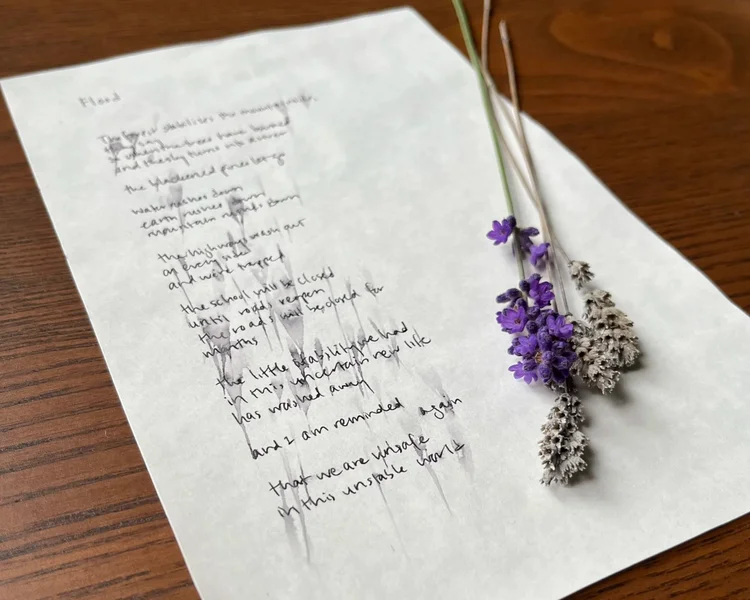
A few years ago, after I wrote my fire memories into Burning Sage, there were still poems that were too difficult, too raw, to sit with. I couldn’t revisit them without the grief and pain coming back. So, on a spring day, I wrote them out—black ink on half sheets of paper—and hung them in the trees near our house. Aspen, saskatoon, snowberry, mock orange. Poetry. My daughter Helen and I watched, wondering if the sun would bleach the poems clean, or if the rain would wash them away. My words, out of my hands, held by the evening breeze.
|
Songs from the Lytton fire
|
|

|
I recently attended the Elektra concert If the Earth Could Sing, with the premiere of composer Andrew Staniland’s Songs from the Lytton Fire. My fire memories, sung by a choir. Listening to the first movement (excerpt here) was an especially surreal experience. The poem “4:54 p.m.” is about the moment I ran from the flames; in my memory, it is a flash, an instant, a single heartbeat. When setting it to music, though, Andrew chose a slow tempo—the score literally says “Slow burn.” The first movement, that one moment, is seven minutes long. My fire memories, stretched out and slowed to a crawl. Helen came to the concert with me. I’m glad she could see it—how what we hold dear can change in other hands, and find different power there. |
|
|
|
|
Tonight at 9 p.m. and midnight, you can watch Emergence: Women in the Storm on Knowledge Network. It's about women at the forefront of the climate crisis in BC and the NWT—disaster survivors, first responders, Indigenous youth, community leaders—including voices from Lytton. I'm part of it, reading poems from Burning Sage throughout the film. The filmmakers, Nova Ami and Velcrow Ripper, hold our stories and my poems with grace and compassion, and I’m grateful to them. The film is also streaming on Knowledge.ca. I hope you get a chance to see it.
|
|
The book in progress doesn’t always come easily, so I’ve been writing around the edges of it. This is an excerpt from “Tending,” a recent piece: Maybe there are two books, I tell myself, even though I can’t even seem to begin writing one. I open the laptop and in the white page on my screen I see the vastness of it, the enormity of the story I am trying to tell. How do you hold something so big, the grief of an entire community? How do you hold the story of yourself? In the podcast, the famous author talks about five years of writer’s block before she wrote her first book. I’ve been trying to write for a month, a month of double-clicking a blue icon and staring at the screen. I don’t have five years to spare. I know it is my inner critic that is doing the writing, or rather, not doing it. I want to thank her and show her the door, but I don’t know who will be left when she goes. So there are two books. I will write one for the community, I will create space for their stories. And I will write one for me, I will pull at my own roots. Or I will stare at a white page for five years.
|
|
|

|
Spílǝx̣m: A Weaving of Recovery, Resilience, and Resurgence
Nicola I. Campbell Spílǝx̣m means “remembered stories” in Nłeʔkepmxcín. The author—who is Nłeʔkepmx, Syilx, and Métis—weaves poems and stories of her life, her family, and her community into a powerful book. |
|
|
|
Memories, out of my hands, softened by rain.With love from Lytton, Meghan
|
|
|
|